Lucy: Hello Valeriya! Thanks so much for joining us at Introverted Indies. I’m looking forward to getting to know you and your writing. So, to get things started, can you tell us a bit about yourself?
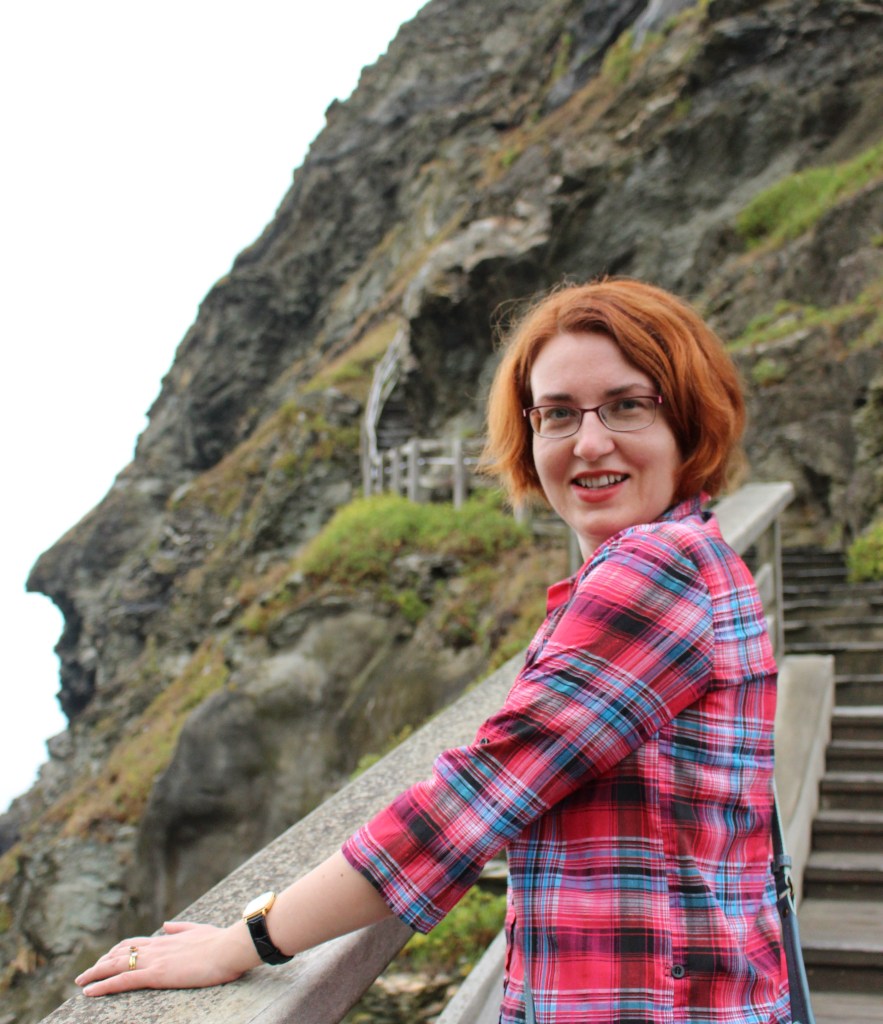
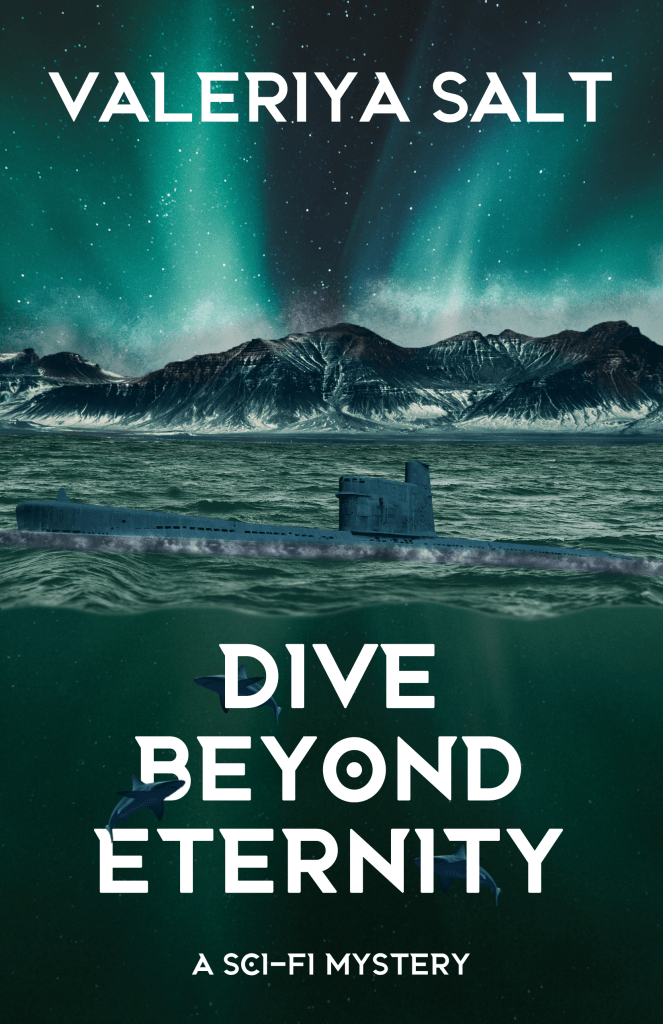
Valeriya: I am a thriller and sci-fi author from Sheffield (UK). Born in Belarus, I’d lived for many years in different corners of Eastern Europe before settling in the North of England. I studied History and earned my Master’s degree in Art Expertise at St Petersburg University of Culture and Arts. My short stories and essays have appeared in numerous anthologies and magazines, earning an Honourable Mention in the Writers of the Future Awards in 2022. My nautical sci-fi/mystery, Dive Beyond Eternity, was published by Northodox Press in 2023 and was shortlisted for the 2025 Eyelands International Book Award. I’m currently looking for a good home for my second novel, a standalone speculative thriller The Seeds of Sky, while writing the sequel to Dive Beyond Eternity.
L: Thanks Valeriya! You’re evidently an experienced writer at this point, so I’d love to know where your writing journey started before delving more into learning about your specific stories. What first made you want to write?
V: I’ve always been an avid reader. I believe my love of books and storytelling ignited my interest in writing, a passion I’ve been developing since my teenage years. I wrote short stories and novellas in my mother tongue (Russian). When I relocated to the UK from St Petersburg, the feeling of isolation pushed me to escape in the imaginary worlds I created myself. My writing supported my mental wellbeing during the never-ending COVID lockdowns. To me, it is some sort of solace and escape when real life becomes too overwhelming.
L: Wow, that’s a big move! I can imagine that came with its struggles. And I fully agree that reading and writing really helps when life becomes too overwhelming. Do you find that you tend to write some of your own feelings and experiences into your stories, too?
V: I do! Sometimes even unintentionally, I put my characters through challenges of solitude, discovery, displacement, etc. My cast of characters is very diverse. Some of the characters speak English as a second language, for example. Some of my works reflect on my passion and personal interests, such as history and travel. Writing Dive Beyond Eternity, I wanted to weave in the story my interests in submarines and history of World War II. My family has a long history of naval service. Submarines always fascinated me with their advanced technologies and slender design. I’ve even visited one… So my experience and my interests play a major role in my writing, and although I primarily write speculative fiction, the experience and emotions it’s based on are very real.
L: Yeah, that’s really great, and it must be lots of fun weaving your own interests into your work. I find that’s what really brings stories to life (as both a reader and writer) – having those links to the real world. Now, you mentioned that Dive Beyond Eternity was published by Northodox Press. How was your journey to publication? Did you go down the traditional querying route to sign with them?
V: Yes and no. I’d been querying for over two years before signing with Northodox Press. I’d received some interest from agents, but it never came to fruition. I was ready to put the project aside and focus on something new when, talking to somebody else on Twitter/X led me to Ted O’Connor, an editor at Northodox Press. It turned out he was also from Sheffield and was specifically looking for speculative fiction by local authors from the North of England. He invited me to send him a query package. Two or three months later, he requested the whole manuscript. Dive Beyond Eternity was published the following year. So my journey to publication wasn’t short and easy, but it resulted in releasing my debut novel with a press, championing northern voices that are currently overlooked by the industry.
L: Ah, yes. The querying journey can be a real emotional rollercoaster. But it’s fantastic that you were able to connect with Northodox Press. I published my debut book with a small press as well. How did you find the process of working with them?
V: I found the process really enjoyable. They listened to my suggestions and replied to my endless questions about the edits, cover, contract and other details. They ran as many rounds of edits as required. The turnaround time was also much quicker than it would’ve been with a traditional publisher or an agent. Unfortunately, they scaled down their business this year, focusing solely on historical fiction. Now, I’m looking for a new home for my future books.
L: It sounds like you had a really collaborative experience with them which is great. Thank you for sharing. So, you mentioned earlier that you’re currently trying to find a home for your speculative thriller, The Seeds of Sky. What can you tell us about that book?
V: I started to write The Seeds of Sky in 2018. So it’s been a long-going project which I’ve kept in my drawer, working on it on and off. It started as a novella, but after numerous rounds of beta reading and editing, it has grown into a full-length novel. Although a fast-paced thriller full of twists and turns, the story is, above all, about identity, family ties, and the path to self-discovery.
Here’s a short blurb: Vitaliy Kravits, a “Chernobyl child” turned urban explorer. Snowboarding in Scotland, he meets a German couple who invites him to their house where Vitaliy is drawn to a file, written in Russian, which the couple asks him to translate. The document reveals a classified underwater facility from the Cold War era, hidden in Montenegro. Vitaliy can’t miss an opportunity to explore it. Six months earlier, a prominent chemist died in Berlin. The authorities believe it is a heart attack. Police officer, Leah Belstein, launches a murder investigation. When Vitaliy comes under attack in Montenegro, he learns about the death of his twin. With his life at stake, Vitaliy is on the hunt for a mysterious alien object, the Seeds of Sky, and for the truth about his past.
The book explores the legacy of the Cold War as well as addresses such complex topics like the Chernobyl disaster, which I am closely familiar with. My grandfather was one of the specialists summoned to assist the so-called “liquidators” to coordinate the cleanup operation. Writing the book, I wanted to shed some light on the Chernobyl disaster, showing it from a different perspective – a person affected by it as a child who overcame his health issues to become the man he always wanted to be. However, that came at a high cost…
L: The Seeds of the Sky sounds great! I love the link to Chernobyl and how you’ve woven in your family history whilst exploring the disaster in more depth. It’s evident there are lots of threads to the story and you mentioned it’s a fast-paced thriller. How did you finding write that compared to Dive Beyond Eternity, which I assume is more sci-fi in genre?
V: Ah, thank you! It’s so nice to hear that you like the concept.
Although it is set in the present day UK (+/- 3-5 years), Dive Beyond Eternity has more sci-fi and even time-travel elements. It was easier for me to write in terms of skill as I wrote it during COVID, much later than The Seeds of Sky. However, Dive Beyond Eternity has more historical elements as well as technical details. With many scenes set aboard a World War II German U-boat and a modern day British submarine, I needed to dig deeply into the technical side of the story. For example, researching about the vessels and how to operate them, life of the crews while on patrol, the Battle of the Atlantic as well as the historical period in general.
L: Ahh yes, I can imagine that took a fair amount of research to get the technical elements right for the story. Did you enjoy that aspect of writing Dive Beyond Eternity?
V: Absolutely. In fact, research is one of my favourite parts of creative writing. I’ve learned so much about submarines (U-boats), a subject that remains underrepresented in fiction due to the secrecy surrounding it, and World War II history in general.
L: Yeah, I bet it was a really fascinating topic to delve into.
So, before we wrap up, I wanted to ask a bit about your short stories as well. You mentioned you’ve had those published in anthologies. How would you say writing short stories differs to novels?
V: To me, writing short stories is far more difficult, because of their very limited wordcount. Most publishers and magazines don’t accept stories longer than 5,000 words. Everything over 7,000 is classed as a novelette and is very difficult to publish. However, I still enjoy writing them as they give me a good break from novels, especially when I’m stuck with a plot hole or experiencing a writer’s block. It feels good sometimes to put a long project aside, to distance myself from it, and switch to something completely new and fresh that I can finish in a couple of days or weeks. Short stories are also good for building a portfolio of published works for emerging authors who are yet to publish a full-length novel. Writing short fiction allows me to experiment with different genres – from horror and mysteries to alternative history and fantasy – as well as with different structures and point of views.
There’re numerous awards and competitions for short stories writers. Winning one of them can also help a new author to get noticed as well as earn some cash.
L: Yeah, I can imagine it’s gives something of a palate cleanse to write a short story, especially if you’re stuck in a novel or just wanting to take a break from longer form writing.
So, final question Valeriya – what advice would you give someone seeking to set out on their author journey?
V: If you want to be a published author, the first thing you need is a lot of patience and persistence. Whatever route you take — self-publishing, the traditional one, or something in between, going with a small indie press like I did with my debut novel — there’s a long way to travel between the first draft and your book sitting on a bookshelf in a shop or being listed on Amazon. Sometimes the journey may turn into an emotional rollercoaster with sudden rises and falls. My advice is not to rush it. Find as many beta readers and critique partners as you can, hire a professional editor and proofreader (if you can afford it), do your research into publishers and agents. However long and complicated it is, it’s also very rewarding, if not always financially, then at least emotionally.
L: Excellent advice, and I totally agree – it’s very rewarding emotionally. 😊 Thank you so much for joining us Valeriya, it’s been fantastic getting to know about you and your writing journey!
Valeriya Salt is a sci-fi and thriller author from Sheffield (UK). She studied history and earned her Master’s degree in Art Expertise at St. Petersburg University ofCulture and Arts. Born in Belarus, she’d lived for many years in different corners ofEastern Europe before settling down in the north of England.
Her short stories, essays, and reviews have appeared in anthologies and magazines,and won an Honourable Mention in the Writers of the Future Contest in 2022.
Her debut novel Dive Beyond Eternity was published by Northodox Press in 2023 andwas shortlisted for The Eyelands International Book Award 2025.
Dive Beyond Eternity Purchase Links:
 Lucy A. McLaren
Leave a comment