Lucy: Hello Fay! Thanks so much for joining us at Introverted Indies. I’m looking forward to getting to know you and your writing. So, to get things started, can you tell us a bit about yourself?
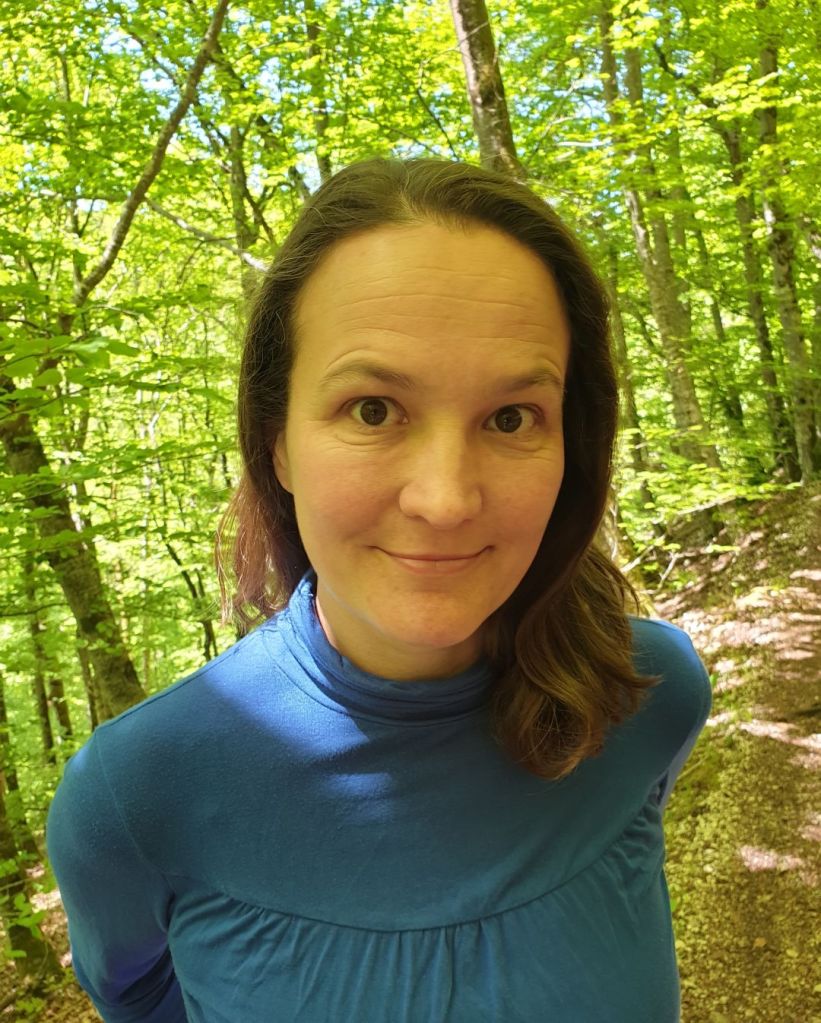
F: Hi, I’m Fay Abernethy. *Waves left hand* I’m a white, able-bodied, British, middle-aged mother of two teenagers. I like to wear jeans, cardigans and comfy shoes, and I read a lot. Anything and everything, from romance and historical fiction to fantasy and sci-fi. But until just over ten years ago, I never considered the possibility of writing a book myself. Being an author was not a life ambition for me. So how did it happen?
I met my lovely Bavarian husband in 2000, in a driveshafts factory in what used to be East Germany. We were both engineers in the automotive industry, on the GKN trainee programme. After a lot of moving about, we settled in the south of Germany, close to his family. Time passed and I got bored with corporate life, so I started my own business as a freelance German-to-English translator.
The German school system is NUTS, with schooldays starting at 7:45 and ending at different times like 12:55, or worse, 11:10! I knew that, if we wanted kids, one of us working from home would be the best way to manage this. But nobody warned me how hard being the primary carer for small children is. Actually, they did, but I didn’t understand until I experienced it myself. I found the lack of headspace the hardest.
And that’s how I started writing.
My solution to that permanent zombie state of sleep deprivation combined with repetitive domestic tasks was to create a dreamworld: a place in my head I retreated to, to escape the relentless pressures of parenthood. I visited it while cooking, doing laundry or yoga, walking up mountains, swimming, or at night before sleeping. Or in the morning, before I got up.
Towards the end of 2012, the dreamworld got so big, I started writing bits of it down. Someone gave me a beautiful ‘Paperblanks’ notebook for my birthday that year and, one day, I just opened it and began to write.
Fast forward to 2026: I’ve finished notebook number 12, which now contains the plot for book four in my ‘Shantivira’science fantasy series.
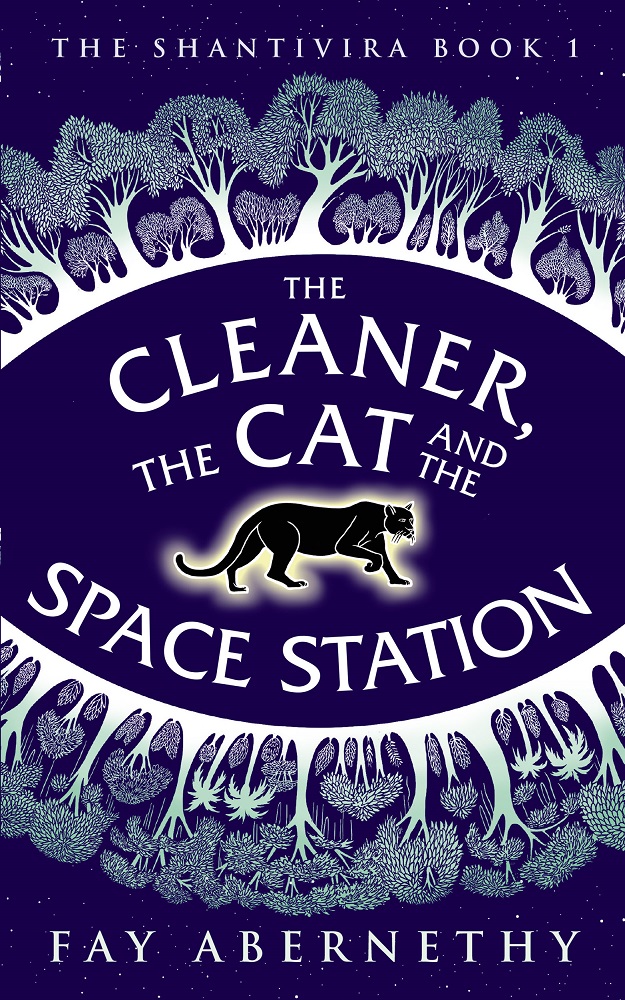
L: It’s really interesting to hear about your route to becoming a writer, because for so many people I’ve spoken to it’s been something that started in childhood. I fully empathise with the difficulties and struggles of being a parent and how much headspace and energy that takes up. I must commend you for prioritising yourself within the maelstrom of parenthood and finding your outlet in writing!
So, you’re working on book four in your series, but let’s rewind. Tell us about book one and how you found writing that. Did you plan it, or was it a case of letting the worlds you’d imagined coming out on the page and the story coming together quite naturally through that process?
F: Well, this was 2013, and I knew NOTHING about writing. As an experienced translator, I can string a sentence together all right, but I had no clue about writing fiction. There was no plan. I had an idea for a story, started writing, and kept going because I wanted to find out what happened next. Time passed, and the story became a novel.
In 2016 (a terrible year, for so many reasons), I submitted my book to 25 agents. I knew the publishing industry operated on a different timescale to the automotive industry or the translation industry. So I waited. For months. Finally, I heard back from them all: a resounding and unanimous 25 rejections.
There was something wrong with my book. Deep down, I knew it myself already, but I couldn’t have told you what it was. I needed expert help. So I approached a writing organisation called Jericho Writers and got a professional editor to review my manuscript.
In a friendly and helpful way, this editor proceeded to tear my beloved story and characters limb from limb. He gave it to me straight. I’d made every mistake it was possible to make. Plus, I’d entirely failed to include any kind of plot. If I ever wanted this story to reach an audience, I’d have to do a full rewrite.
But I felt my characters deserved a wider audience than just me and I wasn’t ready to give up. I did multiple online writing courses. I read about writing. I absorbed all the information I could. Eventually, I understood the essential elements for writing a book people want to read, and the amount of work required (more than I’d ever imagined).
I assembled a full framework for the plot and got to know my protagonists in greater detail. Once I had a story arc for five books, I started writing again, remembering everything I’d learned. Round one had been my apprenticeship. Now I was going to get it right.
Writing a book is like climbing a mountain. It’s a slow plod; crafting it word by word, sentence by sentence, paragraph by paragraph. Unexpected things happen. You will have to stop and eat chocolate. But eventually you get there: to the summit – or to the end of the story. Worth celebrating (more chocolate), but it’s just the halfway point. You’re not done until you get safely back down and all the way home.
In writing terms, this means: editing. For me, this took at least as long as the original text. Getting the length down to bring the story across in as few words as possible. Detecting plot glitches. Making sure each character goes on a journey which is resolved at the end. Fact checking. Polishing the manuscript until it sparkles.
In 2020, I sent it off to Jericho Writers again, and this time I received an incredibly positive response from the editor they assigned me. I quote:
‘I remember reading “1984” and “The War of the Worlds” as a teenager and thinking, “How do we stop this happening?” But when I finished this manuscript, I found myself thinking, “How do we make this happen?” This story is timely and has considerable commercial appeal.’
I made the changes she suggested and was finally confident that my manuscript was the very best it could be. I decided to self-publish rather than try the traditional publishing route again. In the meantime, I’d learned how much control you have to give up if you publish traditionally, with no guarantee of results. I felt I’d rather start small and build an audience slowly, on my own terms.
So that’s what I did. Initially just with Amazon, with my ebooks in Kindle Unlimited. At the end of 2025, I pulled them out of the Kindle Select program and went ‘Wide’, i.e. I made them available via other ebook retailers too, such as Apple, Kobo and Google Play.
L: It sounds like you really put in a lot of work to get your book where you wanted it to be. How did you find receiving that initial editor feedback from Jericho Writers?
F: Well, this was my first ever experience of editorial feedback, so it was a bit of a shock! Especially when the editor said, ‘It’s Hogwarts without anything untoward happening, as experienced by some random Hufflepuff.’
Now I’ve had a few manuscript assessments, I understand you always go through a range of emotional responses (denial, anger, etc.) before you can calm down enough to absorb the useful information from the editor’s report. You have to sit with it for a bit before responding.
This particular report is still the best and most helpful I’ve had from any editor. It ran to over 70 pages, packed with advice and reference material; stuff I still use today. Technical rules about points of view I’d never considered, and pointing out the need for an antagonist/high stakes, and that characters must change and grow during the course of the story.
The editor also gave me an hour-long Skype call. As he is nocturnal and I live in a different time zone and had small children, this meant having our meeting at 4 am! But he was really encouraging, and emphasised he’d only been so hard on me because he could see the potential of the world I’d created.
Again, writing is like climbing a mountain. This was exactly like the bit where you think you’re nearly at the top, then you get a bit higher and the actual mountain you’re supposed to be climbing looms into view for the first time. Your stomach flips as you realise what you’ve been walking up until now was just a tiny foothill. Then you pull yourself together and keep on plodding. (Sorry for all the alpine analogies, but my husband is our local mountain rescue unit leader, meaning I’ve climbed a lot of mountains. The emotional journey and mental stamina required is so similar to writing a novel!)
After this initial feedback, I finally knew what was wrong with my book and had a roadmap to fix it – even though it meant rewriting the whole thing. At the same time, this was 2016, in the months after the Brexit referendum, and racism was on the rise in Britain. This gave me an idea for the antagonist. I also switched the main protagonist from being a white, middle-class, female engineer (basically me) to a trafficked and traumatised Ethiopian teenager, hiding from the UK immigration authorities. Hanna had evolved into such a strong character, she demanded a bigger role.
Have you ever had the sensation that it’s your characters who are in charge of the story, and you’re just typing along behind them, trying to keep up while being repeatedly surprised by what they get up to? That’s what happened when I started the rewrite. Once I’d done my studying and had the framework, the new first draft came together all by itself. It was easy to stay motivated because I wanted to know what happened next, and I couldn’t know until I’d written it! Being in that state of flow is totally addictive. I agree with the late, great Terry Pratchett: ‘Writing is the most fun you can have by yourself.’
L: Oh, 100% – receiving feedback at any stage of your writing always comes with a real rollercoaster of emotions, I find. 70 pages of editorial feedback sounds fantastic though and like it really steered you in the right direction to strengthen your book. And I totally get the mountain climbing analogies. It’s so true, writing a book really does feel that way. It sounds as though it was a real journey for you from initial writing to feedback to rewriting, but that you enjoyed finding your footing and writing voice as you created that final draft.
My own book drew from the growing racism in the UK after the Brexit referendum, too. Was it important to you to explore such real-life issues within your work?
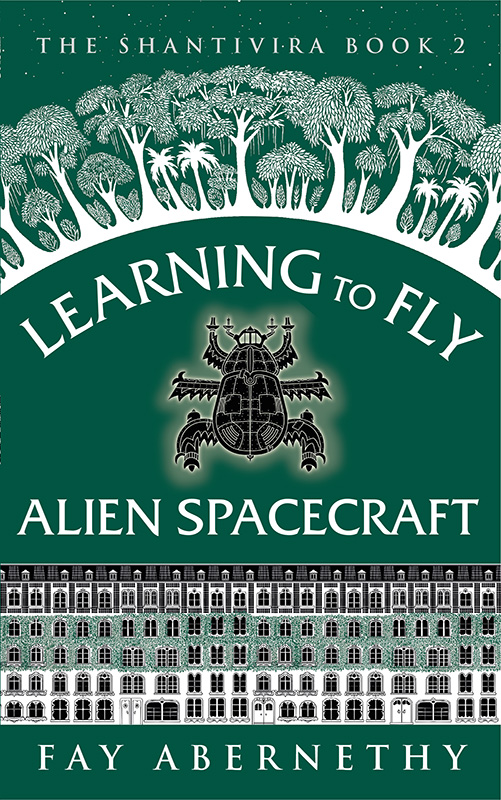
F: Oh, that’s interesting, I’ll add it to my TBR. I think the emotional fallout from Brexit took a lot of us unawares, and for me, writing was a way to work through that.
Yes. After that first editorial feedback, I made sure to ground my work in reality. It was still science fantasy, but in the meantime, I’d started reading a lot of eco-non-fiction, about alternative economic models and societies. Books like: Doughnut Economics, Seven Ways to Think Like a 21st-Century Economist by Kate Raworth; The Spirit Level, Why Equality is Better for Everyone by Richard Wilkinson & Kate Pickett; Utopia for Realists by Rutger Bregman and Who cooked Adam Smith’s Dinner? A Story about Women and Economics by Katrine Marçal.
I took the ideas from these books and others, and used them to shape my alien world – contrasting them with the current situation on our planet. My idea was to help people visualise a society which works for everyone; to combat the climate crisis with imaginative and practical solutions rather than the paralysis of despair.
L: That sounds great, Fay, and like a book that is really valuable for readers during the current state of the world. So, you noted earlier that you’re working on book four in your series. How have you found the process of writing each book in the series since that first book and full rewrite?
F: MUCH easier. Knowing what you’re doing really helps speed up the process!
I have a system now, which I set up with book two. I have an over-arching storyline for all five books, and when I have an idea while I’m writing that would go in a future book, I note it down in the scrapbook file for that book. Nothing special, just a Word document with a load of random stuff in. Ideas I have during the night go in the notebook by my bed. By the time I’m ready to start plotting, I have a fair bit of material to work with.
Then I start working out what order things happen in, using my handwritten notebooks and large Post-It notes. This requires a lot of uninterrupted headspace. In recent years, I’ve been able to do it in the early mornings of our two-week summer holidays, while my family are still sleeping.
Once I have events in rough order, I put each character’s storyline in an Excel file. Each chapter has one field. I have three POV characters, so it’s important to keep an overview. Then I check the plot for each of them hits the right story beats at the right time. I use the Three Act Structure for this. https://kindlepreneur.com/three-act-structure/
Once I’m happy, I print the file with a different background colour for each POV character. Then I cut them up into different chapters and spend an enjoyable afternoon working out what order they should go in and if anything is missing. Then I stick them to my cupboard door with washi tape, in the right order. The whole thing is about a metre long.
That stays there until I’ve written the first draft. I wrote the first draft of book three in six months, but nearly burnt out in the process. I’m taking book four much slower.
I won’t bore you with my editing process, but after I’ve done a LOT of self-editing and I think the story is as good as I can get it, I send it off to Jericho Writers for a manuscript assessment. Then I’ll make more changes based on their editorial feedback and do a final round of editing.
When the final version is ready, I’ll send it to a translator friend (translators have very sharp eyes) for a final proofread. A few more tweaks and it’s ready for typesetting. Yay! Job done!
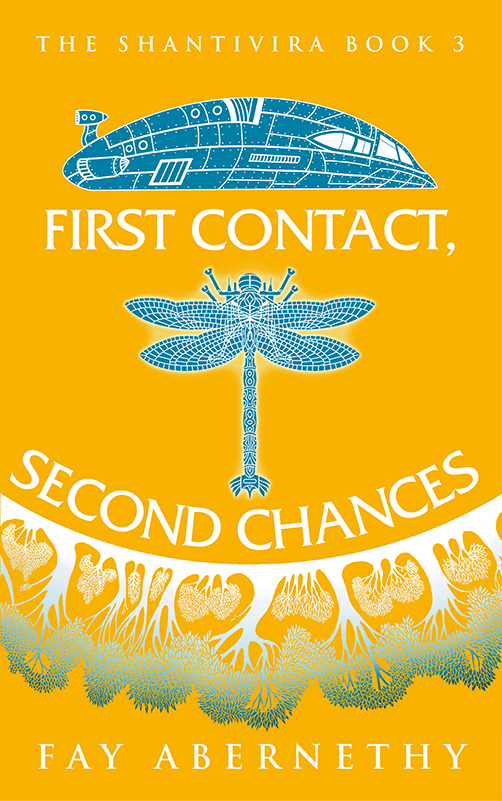
L: Oh wow, you really have got your writing process clear. Thank you for sharing, Fay. Yeah, if there’s anything I’ve learned in writing it’s that just because you *can* write a book quickly, doesn’t mean you should. Burn out is real!! I’m glad to hear you’re taking that into account with book four and not putting too much pressure on yourself. I’m intrigued to know—how would you describe your series to a new reader? Who would enjoy it?
F: Well, in book marketing terms, I describe the series as cozy sci-fi, or solarpunk/hopepunk or eco science fantasy, and ideal for fans of Becky Chambers, Ursula le Guin, Douglas Adams and Doctor Who. But I think we can dive a little deeper today.
Apart from being first contact science fiction with fantasy elements (one of the main characters is the Red Dragon of Wales, who happens to be a shapeshifting alien space demon and married to the human Welsh captain of the space station – plenty of backstory fun there!), something readers really seem to like about the books is their international perspective.
The space station crew are mostly human, but they come from all over the planet, and are selected to represent the demographics of Earth. This means most people aren’t white and only a minority speak English. Trainee pilots spend most of their first year learning “Kawaida”, the interstellar lingua franca, so they can talk to each other and colleagues on the space station.
After growing up in the UK, I lived in France, Thailand and Germany (where I stayed). Learning languages and meeting people from different cultures have enriched my life hugely.
My inspiration for the alien language/pilot school was my ERASMUS year in Lyon, where all the foreign exchange students hung out together, like a big, gossipy, extended family. There were about 70 of us, from all over the world, and we had to speak French to each other because that was the common language. I met some wonderful people, some of whom I’m still in touch with today. We had a blast!
So I’d say the series would appeal to anyone who:
- enjoys science fiction / fantasy and
- hopes for a better future for our planet and all its inhabitants and
- enjoys seeing new places, trying to speak other languages, and meeting people who aren’t exactly like them.
L: Amazing, thanks Fay! I love how you’ve taken real life inspiration from your own experiences and included that in your work.
This has been a fantastic interview, thank you for joining me. As a final point, please could you share the top piece of advice you’d pass on to anyone who is setting out on their author journey?
F: Thank you for having me! And thank you for your great questions; they were fun to answer. My top tip for becoming an author is from a writing course I did during COVID. “The magic can’t happen if you don’t show up for work.”
Never, ever give up. Go as slow as you need to, but stick at it. You’ll be glad you did.
Before I go, I’d like to mention that anyone signing up for my monthly
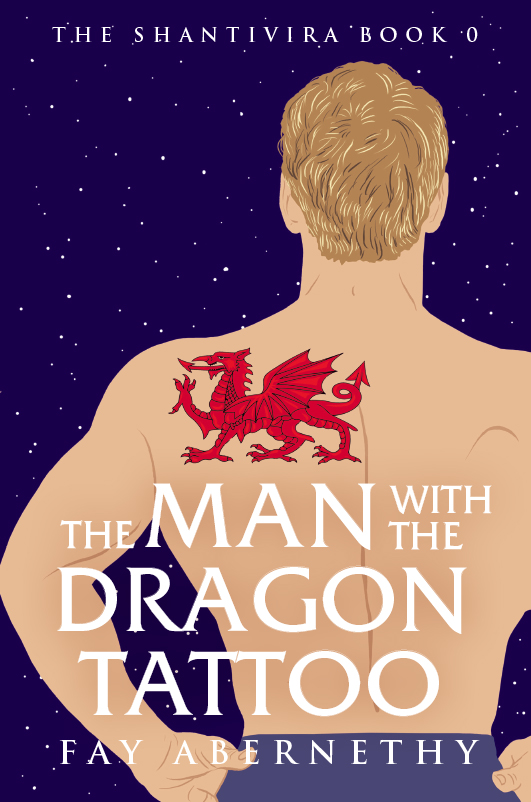
newsletter gets a free download of The Man with the Dragon Tattoo.
This prequel novella tells how Joe Llewellyn, the human captain of the space station, falls in love with his shapeshifting space demon wife. It features a near-miss with an industrial quantity of sewage, and a romantic trip to Rhyl, an unglamorous seaside town on the north coast of Wales. Get it here: https://fayabernethy.com/free-book/
The rest of the Shantivira series is available from most online bookstores. And it’s FREE to read on Kobo Plus!
Here’s my Linktree with all the links: https://linktr.ee/fayabernethybooks
 Lucy A. McLaren
Leave a comment